Cat Dental Disease: Symptoms, Causes and Treatment
By Dr Joe Inglis BVSc MRCVS ·
Dental disease is the most common health problem diagnosed in cats in the UK. It ranges from inflamed gums to painful conditions such as tooth resorption and stomatitis, which are particularly common in cats. Because cats are experts at hiding pain, many owners don't realise their cat has a problem until it is advanced. This guide explains the signs to look for, the main types of dental disease in cats, and how they are diagnosed and treated.
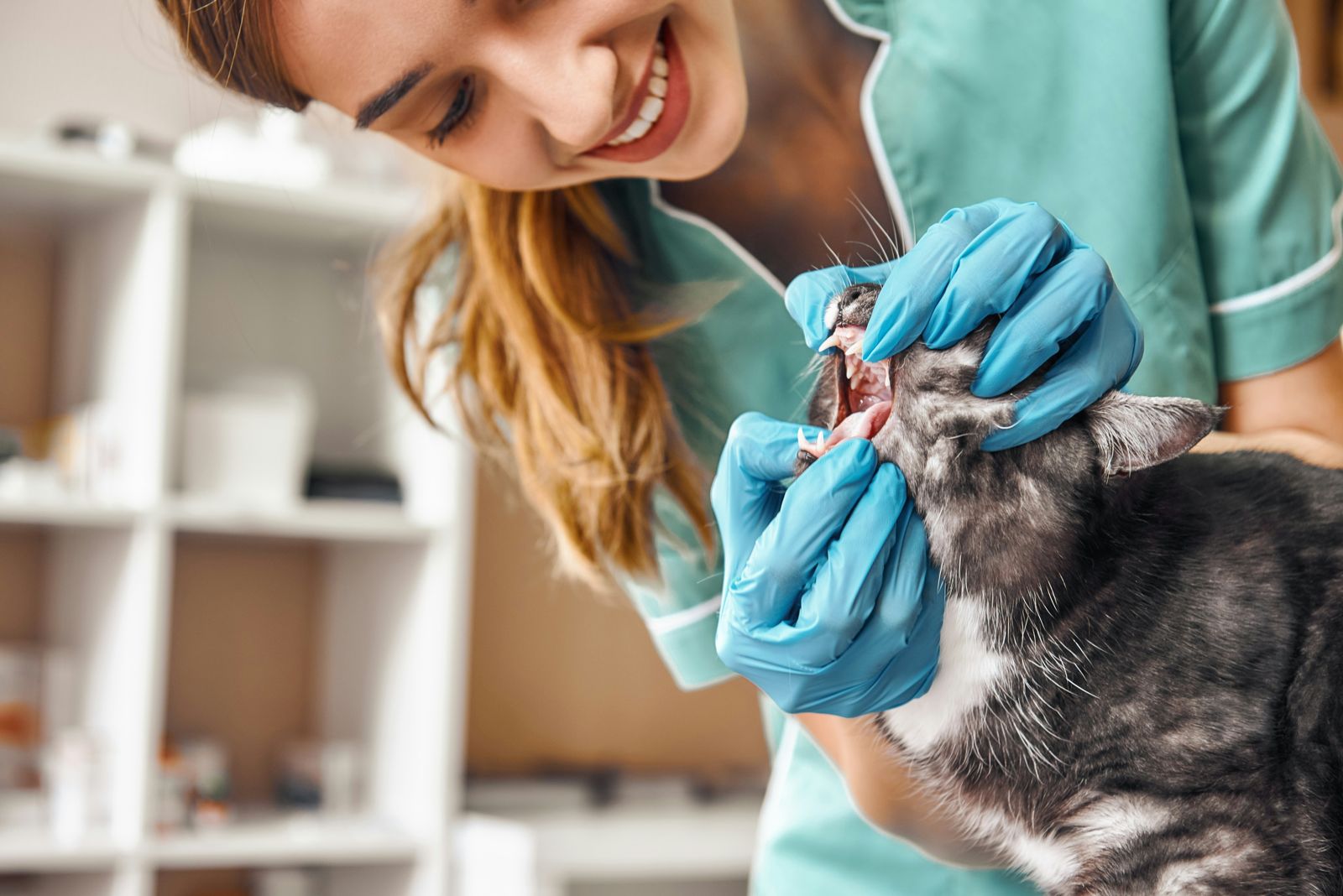
What is dental disease in cats?
Dental disease covers any problem affecting a cat's teeth, gums or the tissues that support the teeth. It usually starts with gingivitis, inflammation of the gums caused by bacteria in plaque. Left untreated, this can progress to periodontal disease, where infection destroys the ligament and bone holding the teeth in place.
Cats are also prone to two conditions that are much less common in dogs: tooth resorption, where the tooth structure is gradually broken down by the body, and feline stomatitis, a severe inflammation of the mouth.
Dental disease is extremely common. A Royal Veterinary College (RVC) VetCompass study of 18,249 UK cats found that periodontal disease was the most commonly diagnosed disorder in cats, recorded in 15.2% of cats in a single year (VN Online, reporting the RVC study). As most disease sits below the gumline, the true number of affected cats is likely to be much higher.
Why cats can hide dental pain
Cats are both predators and prey animals in the wild, and showing weakness could make them a target. As a result, they have evolved to hide pain very effectively, and this instinct remains strong in pet cats.
A cat with painful teeth will usually keep eating, because hunger is a powerful drive. Instead of stopping altogether, they adapt: swallowing food without chewing, chewing on one side, or switching to softer food. These changes are subtle and easy to miss.
This is why regular dental checks matter so much for cats. Many cats have significant, painful dental disease that is only found when a vet examines their mouth. Owners often notice their cat becoming more active, affectionate or playful after treatment, and only then realise how much discomfort their cat was living with.
Signs of dental disease in cats
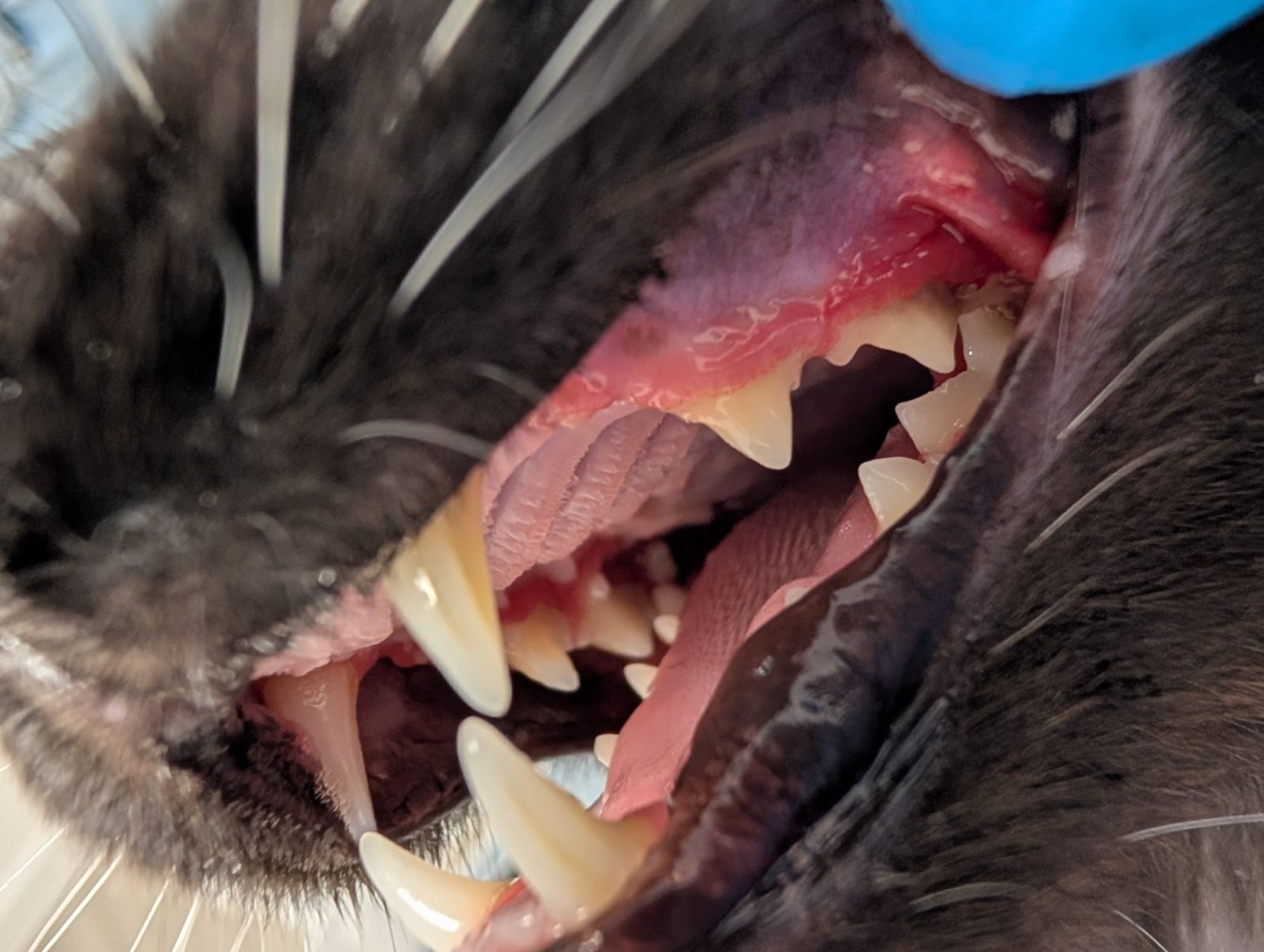
Signs of dental disease in cats are often subtle. Watch for any of the following, and remember that a cat can have painful dental disease while showing none of them.
Bad breath
A healthy cat's breath shouldn't smell strongly. Persistent bad breath is one of the most common signs of gum disease and infection in the mouth.
Red gums
Healthy gums are pale pink. A bright red line along the edge of the gums where they meet the teeth is a sign of gingivitis. Redness at the back of the mouth can indicate stomatitis.
Drooling
Cats don't normally drool. Drooling, wet fur on the chin, or saliva stained with blood can be a sign of mouth pain.
Difficulty eating
Your cat may approach the food bowl with interest, then hesitate, chew carefully, chew on one side or tilt their head while eating. Some cats cry or run away from their food when a tooth hurts.
Dropping food
Dropping food from the mouth, especially dry biscuits, can mean chewing is painful. Many cats with dental pain swallow kibble whole to avoid chewing.
Weight loss
Gradual weight loss can happen when eating is uncomfortable. As weight loss has many causes in cats, it should always be checked by a vet.
Pawing at the mouth
Pawing at the face, rubbing the mouth along furniture, or sudden jaw chattering can signal pain or discomfort in the mouth.
Behaviour changes
A cat in pain may become quieter, hide more, groom less, become irritable, or dislike having their head touched. A scruffy or greasy coat is a common sign that grooming has become uncomfortable.
Common types of cat dental disease
The three most important dental conditions in cats are periodontal disease, tooth resorption and feline stomatitis. A cat can have more than one at the same time.
Periodontal disease
Periodontal disease is an infection of the tissues around the teeth. It starts when plaque builds up and inflames the gums (gingivitis). Plaque then hardens into tartar, and bacteria spread below the gumline, destroying the ligament and bone that hold the teeth in place.
Early gingivitis can be reversed with a professional clean and good home care. Once bone has been lost, the damage is permanent, and badly affected teeth become loose, infected and painful.
Tooth resorption (FORLs)
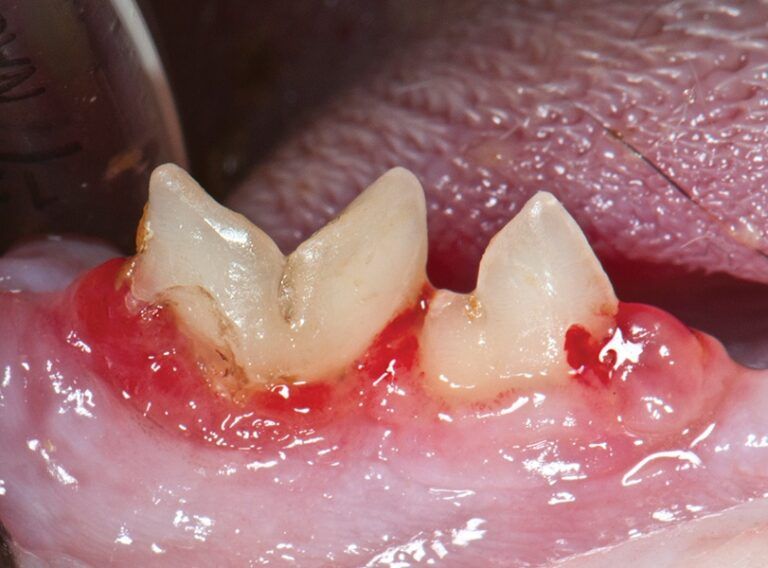
Tooth resorption is a painful condition where the body's own cells break down the structure of the tooth, usually starting at or below the gumline. It was previously called feline odontoclastic resorptive lesions (FORLs), and you may also hear it called "neck lesions" or "cavities", although it is not caused by decay.
It is very common, particularly in older cats, and the cause is still not fully understood. Lesions often look like a small red bump of gum growing into the tooth, or a missing chunk of tooth at the gumline. Many lesions are hidden below the gum and only visible on X-rays. Once a lesion reaches the sensitive inner part of the tooth, it can be extremely painful, and cats may chatter their jaw or flinch when the tooth is touched.
Resorption cannot be reversed or repaired with fillings, so affected teeth are usually extracted.
Feline stomatitis
Feline chronic gingivostomatitis (FCGS), usually called stomatitis, is a severe, painful inflammation of the gums and the lining of the mouth, often extending to the back of the throat. It is thought to be an overreaction of the immune system to plaque bacteria on the teeth, and viruses such as feline calicivirus may play a role.
Cats with stomatitis are often in significant pain. They may drool, struggle to eat, lose weight, stop grooming and become withdrawn. Treatment usually involves extracting most or all of the teeth to remove the source of the inflammation, and most cats improve significantly afterwards. Some need ongoing medical management.
How is cat dental disease diagnosed?
Diagnosis starts with a conscious check and is confirmed with a full examination under general anaesthetic.
- Conscious oral examination. A vet or trained nurse looks at your cat's teeth, gums and mouth while they are awake. This can reveal tartar, red gums, obvious resorptive lesions and signs of stomatitis, and helps decide whether further assessment is needed.
- Examination under anaesthetic. A complete diagnosis needs your cat to be asleep. The vet examines every tooth, probes around each one to check for pockets and hidden resorptive lesions, and takes full-mouth dental X-rays. All findings are recorded on a dental chart, tooth by tooth.
Most cats won't allow a thorough look inside their mouth while awake, especially if it is sore. A conscious check is a valuable first step, but it can miss a lot.
Why cats need dental X-rays
Dental X-rays are essential for cats because so much of their dental disease is hidden below the gumline. A tooth can look normal from the outside but have a painful resorptive lesion or infection in its root.
In cats, X-rays are particularly important for:
- Finding hidden tooth resorption, which often starts below the gum and can't be seen any other way
- Choosing the right treatment for resorbing teeth, as different types of resorption need different extraction techniques
- Making sure no root fragments are left behind, which can cause ongoing pain and infection
- Assessing bone loss from periodontal disease
- Checking for retained roots, abscesses, cysts and tumours in the jaw
Cats' teeth are small, with fine roots that break easily. X-rays taken before and after extractions help make sure treatment is complete. For these reasons, full-mouth dental X-rays are considered essential for every feline dental procedure.
How is dental disease treated?
Dental treatment for cats is carried out under general anaesthetic, so your cat feels no pain and every tooth can be properly assessed and treated. A typical procedure includes:
- Pre-anaesthetic checks, including a health examination and blood tests where needed, particularly for older cats
- Full examination and charting of every tooth, with probing and full-mouth X-rays
- Scaling above and below the gumline to remove plaque and tartar
- Polishing to smooth the tooth surfaces and slow plaque build-up
- Extraction of diseased teeth, such as teeth with resorption, advanced periodontal disease or fractures
- Pain relief, including local anaesthetic nerve blocks during the procedure and medication to take home
- Aftercare, with feeding advice, home-care guidance and a post-operative check
For cats with stomatitis, treatment usually involves more extensive extractions, sometimes combined with medication to control inflammation.
Anaesthetic-free dental cleaning is not suitable for cats. It only cleans visible surfaces, can't detect or treat disease below the gumline, and is likely to be stressful for your cat.
When does a cat need to have teeth extracted?
A tooth is extracted when it is painful or infected and can't be saved. In cats, the most common reasons are:
- Tooth resorption, as resorbing teeth cannot be repaired and are often very painful
- Advanced periodontal disease, where so much bone has been lost that the tooth is loose or infected
- Fractured teeth, where the sensitive pulp is exposed and becomes infected
- Stomatitis, where removing most or all teeth removes the source of the inflammation
- Retained roots, left behind from old broken teeth
For some types of tooth resorption, X-rays show that the root is already being replaced by bone. In these cases, the vet may remove the crown and leave the remaining root to be absorbed naturally, a technique called crown amputation. This is only appropriate when X-rays confirm it is safe.
Owners often worry about how their cat will cope without teeth. Cats adapt remarkably well. Most eat normally afterwards, including dry food, and many are visibly happier once painful teeth have been removed.
Can cat dental disease be prevented?
Periodontal disease can be largely prevented with good home care and regular checks. Tooth resorption and stomatitis can't currently be prevented, because their causes aren't fully understood, but regular checks mean they are found and treated sooner.
- Brush your cat's teeth, if they will accept it. Daily brushing is the most effective way to control plaque. Use a soft finger brush or small brush and a toothpaste made for cats. Introduce it slowly, with lots of rewards; starting with kittens works best.
- Consider a dental diet. Some veterinary dental diets are designed to clean teeth mechanically as your cat chews. Look for products with proven results, such as those carrying the Veterinary Oral Health Council (VOHC) seal.
- Use other products as extras. Dental treats, water additives, gels and supplements can help reduce plaque, but they work best alongside brushing rather than instead of it.
- Have regular dental checks. A check every 6 months helps catch gingivitis, early resorption and other problems while they are easier to treat.
- Book professional treatment when advised. Once tartar or disease is present, home care alone won't resolve it.
Many cats won't tolerate brushing, and that's OK. Regular checks become even more important for these cats.
Does my cat need a dental?
Your cat may need a dental if they have bad breath, red gums, visible tartar, drooling, difficulty eating, or any of the signs above. As cats hide pain so well, a dental check by a vet is the only reliable way to know.
A dental is a treatment for pain and infection, not a cosmetic clean. Visible tartar or red gums usually mean there is disease below the gumline, and tooth resorption is often hidden completely until it is found on X-rays.
What about the anaesthetic? Many owners worry, especially if their cat is older. Modern anaesthesia is very safe when carefully planned and monitored. Pre-anaesthetic checks, including blood tests where needed, help identify and manage any extra risks. For most older cats, leaving painful teeth untreated has a bigger impact on their health and quality of life than a well-managed anaesthetic.
Contact a vet promptly if your cat has facial swelling, has stopped eating, is drooling heavily, or seems to be in pain. Even without signs, an annual dental check is worthwhile, and more often for older cats.
How Luna can help
Luna the Dental Vets is a UK veterinary practice group dedicated entirely to dentistry for cats and dogs. Because dental care is all we do, our vets and nurses are highly experienced in diagnosing and treating conditions such as tooth resorption and stomatitis, which can be easily missed.
When your cat visits Luna, you can expect:
- A dental health check to assess your cat's mouth and explain what we find
- Full-mouth dental X-rays as standard with every dental procedure
- Detailed charting of every tooth, so you know exactly what was found and treated
- Careful, cat-friendly anaesthesia and monitoring, with pain relief tailored to your cat
- Clear aftercare and home-care advice to support your cat's recovery
- Bespoke care packages through the Luna Dental Health Club
We have clinics in Bristol, Reading and Eastleigh, with Surbiton opening soon, and we welcome both direct bookings from owners and referrals from your regular vet.