Dog Dental Disease: Symptoms, Stages and Treatment
By Dr Joe Inglis BVSc MRCVS ·
Learn how to recognise dental disease in dogs, including tartar, gingivitis, periodontal disease, bad breath and painful teeth, and when veterinary dental treatment is needed.
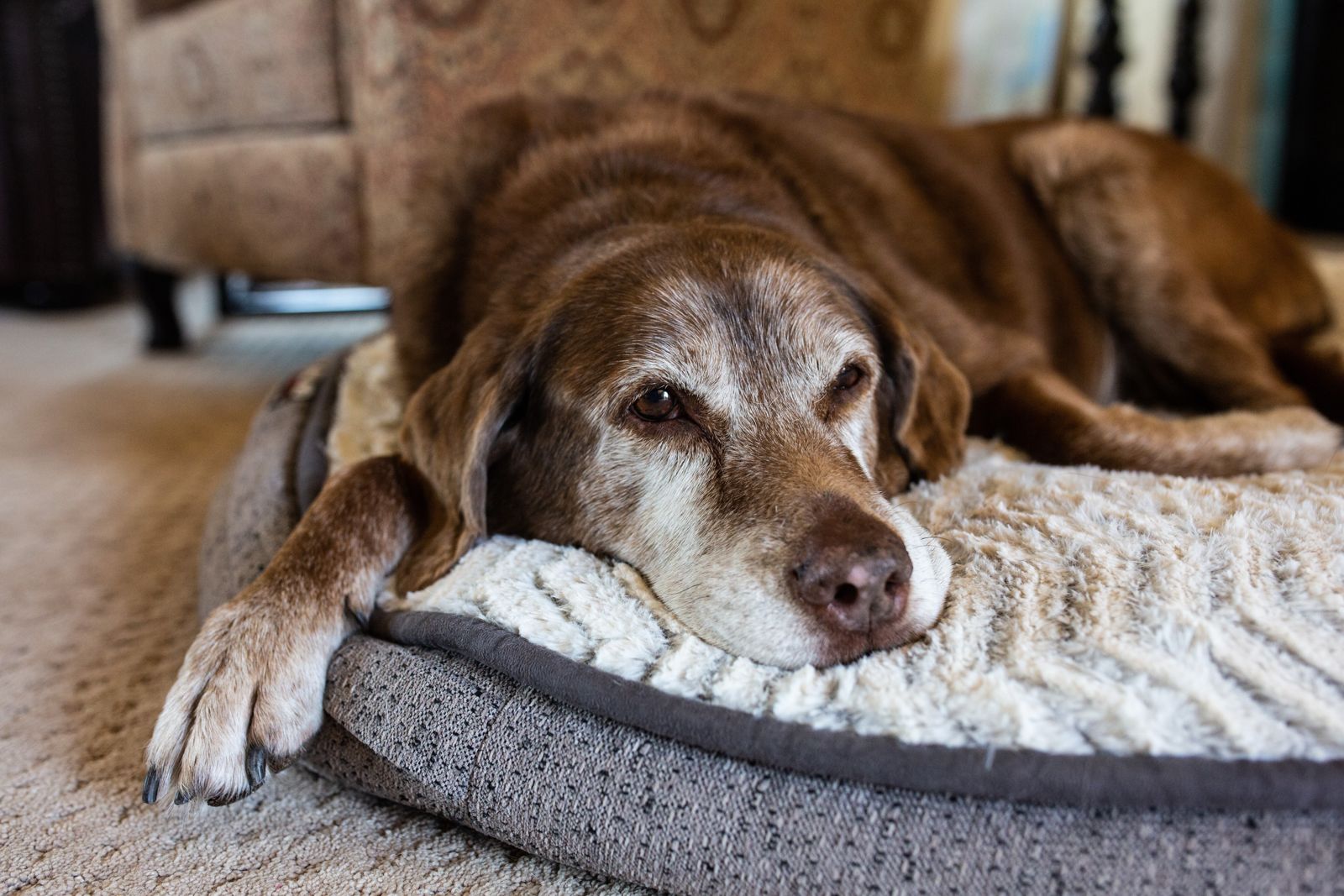
What is dental disease in dogs?
Dental disease is a general term for problems affecting a dog's teeth, gums and the structures that hold the teeth in place. By far the most common form is periodontal disease, an infection and inflammation of the tissues around the teeth.
It begins with gingivitis, inflammation of the gums caused by bacteria in plaque. If it continues, the infection spreads below the gumline and gradually destroys the ligament and bone that anchor each tooth. This later stage is called periodontitis, and the damage it causes cannot be reversed.
Other dental problems seen in dogs include:
- Fractured teeth, often from chewing hard objects such as bones, antlers or stones
- Tooth root abscesses, which can cause facial swelling
- Worn teeth, from chewing tennis balls or stones
- Retained baby (deciduous) teeth, which can crowd adult teeth and trap plaque
- Malocclusions, where teeth don't meet properly and may damage the gums or palate
- Oral tumours, which are less common but important to detect early
How common is dental disease in dogs?
Very common. A Royal Veterinary College (RVC) VetCompass study of 22,333 dogs attending 784 UK vet practices found that periodontal disease was the most commonly diagnosed disorder in UK dogs, recorded in about 1 in 8 dogs in a single year. That was well ahead of ear infections (7.3%) and obesity (7.1%) (RVC VetCompass).
The real figure is almost certainly higher. These numbers only count dogs that were diagnosed during a routine visit, and most dental disease sits below the gumline, out of sight. Studies that examine dogs' mouths fully under anaesthetic find disease in a much larger proportion of adult dogs.
Risk increases with age, and some dogs are more prone than others, including:
- Small and toy breeds, whose teeth are often crowded into small jaws
- Flat-faced (brachycephalic) breeds, such as Pugs and French Bulldogs, for the same reason
- Older dogs, as damage builds up over time
What are the signs of dental disease?
Dogs are very good at hiding mouth pain. Most keep eating even with painful teeth, so a good appetite does not mean their mouth is healthy. Signs to look out for include:
- Bad breath that is persistent, not just after eating
- Yellow or brown build-up (tartar) on the teeth, especially the back teeth
- Red, swollen or bleeding gums, often seen as a red line along the gumline
- Receding gums or exposed tooth roots
- Loose, broken or missing teeth
- Chewing on one side, dropping food or eating more slowly
- Preferring soft food or avoiding hard treats and toys
- Pawing at the mouth or rubbing the face along the floor
- Drooling, sometimes with blood in the saliva
- Swelling on the face, especially below the eye, which can signal a tooth root abscess
- Changes in behaviour, such as being quieter, grumpier or head-shy
Many owners only realise how much discomfort their dog was in after treatment, when they notice their dog is brighter, more playful and eating more happily.
What causes dental disease?
The main cause is plaque, a sticky film of bacteria that forms on the teeth within hours of eating. If plaque isn't removed, minerals in saliva harden it into tartar (also called calculus) within a few days. Tartar can't be brushed off and gives bacteria a rough surface to cling to.
The real damage happens below the gumline. Bacteria trigger inflammation in the gums, and over time the body's own response to that infection breaks down the ligament and bone holding the teeth in place. This is why a tooth can look fairly clean on the surface but still be badly diseased underneath.
Factors that increase the risk include:
- No regular tooth brushing, the single biggest factor owners can control
- Breed and jaw shape, with crowded or misaligned teeth trapping more plaque
- Age, since disease builds up gradually over a lifetime
- Retained baby teeth, which create extra spaces for plaque
- Chewing hard objects, which can fracture teeth and expose the inner pulp to infection
- Other health conditions, such as diabetes, which can affect how the body fights infection
What are the stages of dental disease?
Veterinary surgeons grade periodontal disease in stages from 0 to 4, based on how much of the tooth's supporting tissue has been lost. The stage is assessed tooth by tooth, using probing and dental X-rays under anaesthetic.
| Stage | Name | What's happening | Reversible? |
|---|---|---|---|
| PD0 | Healthy | No gum inflammation or attachment loss | n/a |
| PD1 | Gingivitis | Gums are inflamed, but no loss of supporting tissue | Yes, with cleaning and home care |
| PD2 | Early periodontitis | Less than 25% of the tooth's support has been lost | Damage is permanent, but can be stopped |
| PD3 | Moderate periodontitis | 25 to 50% of support lost | Damage is permanent; some teeth may need extraction |
| PD4 | Advanced periodontitis | More than 50% of support lost | Affected teeth usually need extraction |
The key point for owners is that only the earliest stage can be fully reversed. Once bone is lost, it does not grow back, so early treatment saves teeth.
How is dental disease diagnosed?
Diagnosis happens in two steps: a conscious check-up, then a full examination under general anaesthetic.
- Conscious oral examination. A vet or trained nurse looks at your dog's teeth and gums while they are awake. This picks up visible problems such as tartar, gum inflammation, broken teeth, and swellings, and helps decide whether a full assessment is needed.
- Examination under anaesthetic. A complete diagnosis is only possible with your dog asleep. The vet checks every tooth individually, measures any pockets around the teeth with a dental probe, and takes dental X-rays. Findings are recorded on a dental chart, tooth by tooth.
A conscious check is a useful first step, but it can only show what's above the gumline. Most dogs won't tolerate probing of sore teeth while awake, and many problems are invisible without X-rays.
Why are dental X-rays important?
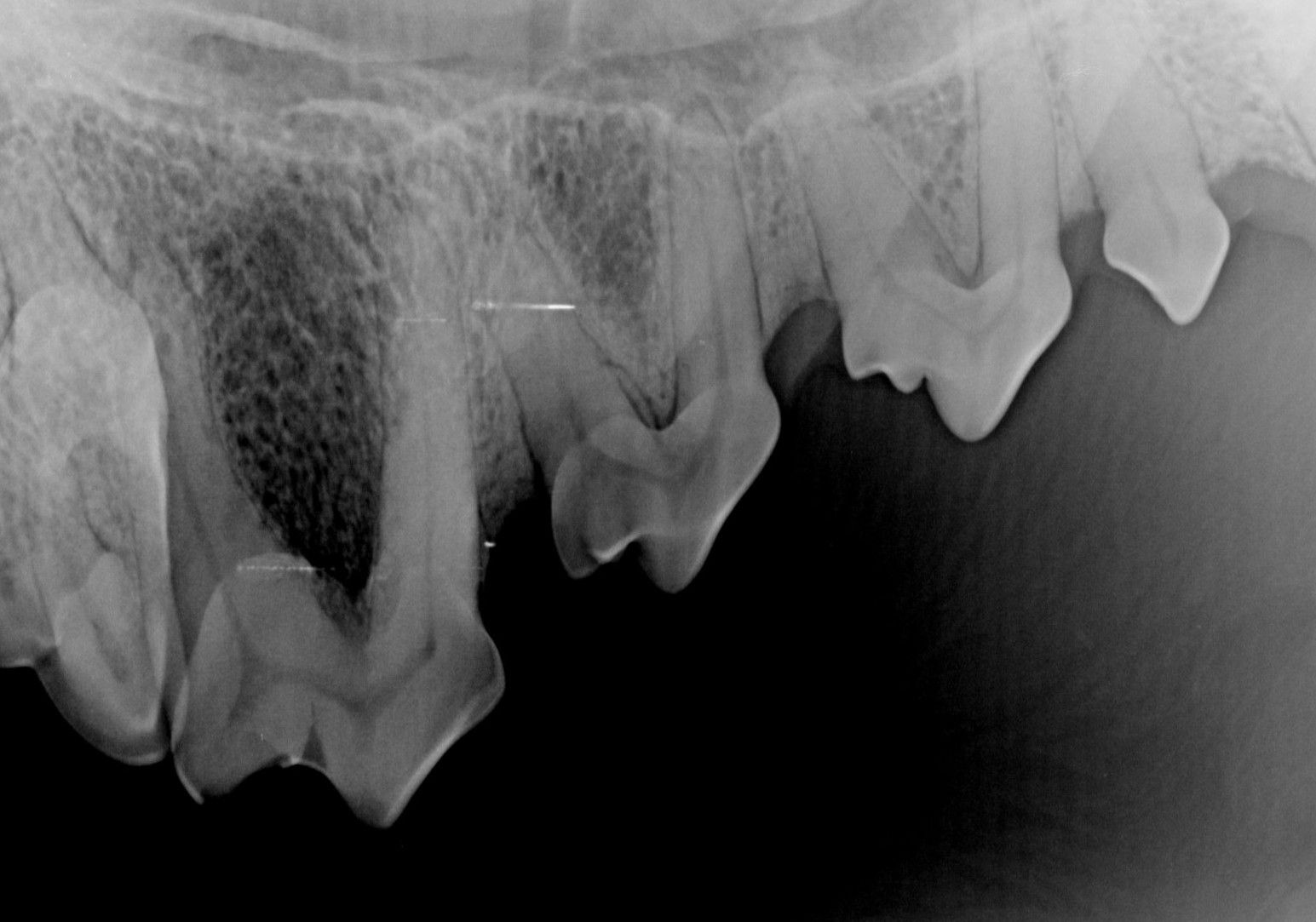
Around two thirds of each tooth sits below the gumline, hidden inside the jaw. Dental X-rays are the only way to see the roots and surrounding bone, which is exactly where periodontal disease does its damage.
X-rays can reveal problems that look completely normal from the outside, including:
- Bone loss around the roots
- Root abscesses and infection at the tip of the root
- Fractured roots beneath an intact crown
- Resorptive lesions, where the tooth is being broken down from within
- Unerupted or retained roots left behind from old broken teeth
- Cysts and tumours in the jaw
Without X-rays, diseased teeth can be missed and left to cause ongoing pain, while healthy teeth may be removed unnecessarily. They also show the shape of each root, which makes extractions safer and less traumatic. For these reasons, dental X-rays are considered best practice for every dental procedure – and are always included in Luna dentals.
How is dental disease treated?
Treatment is carried out under general anaesthetic, so your dog feels no pain and the vet can work safely and thoroughly. A typical dental procedure includes:
- Pre-anaesthetic checks, including a health examination and, where needed, blood tests
- Full examination and charting of every tooth, with probing and full-mouth X-rays
- Scaling above and below the gumline with an ultrasonic scaler to remove plaque and tartar
- Polishing to smooth the tooth surface, so plaque is slower to build up again
- Treatment of diseased teeth, which may mean extracting teeth that are too damaged to save
- Pain relief, including local anaesthetic nerve blocks and medication to take home
- Recovery and aftercare, with advice on feeding, home care and a check-up
Extractions can sound worrying, but removing a painful, infected tooth brings real relief. Most dogs eat well afterwards, even if they have lost several teeth.
Why not a dental without anaesthetic? Some services offer "anaesthetic-free" scaling of awake dogs. Veterinary dental specialists advise against this. It only cleans the visible surfaces, can't treat disease under the gumline, doesn't allow X-rays, and can be stressful or painful for the dog. It may make teeth look clean while serious disease goes untreated.
Can dental disease be prevented?
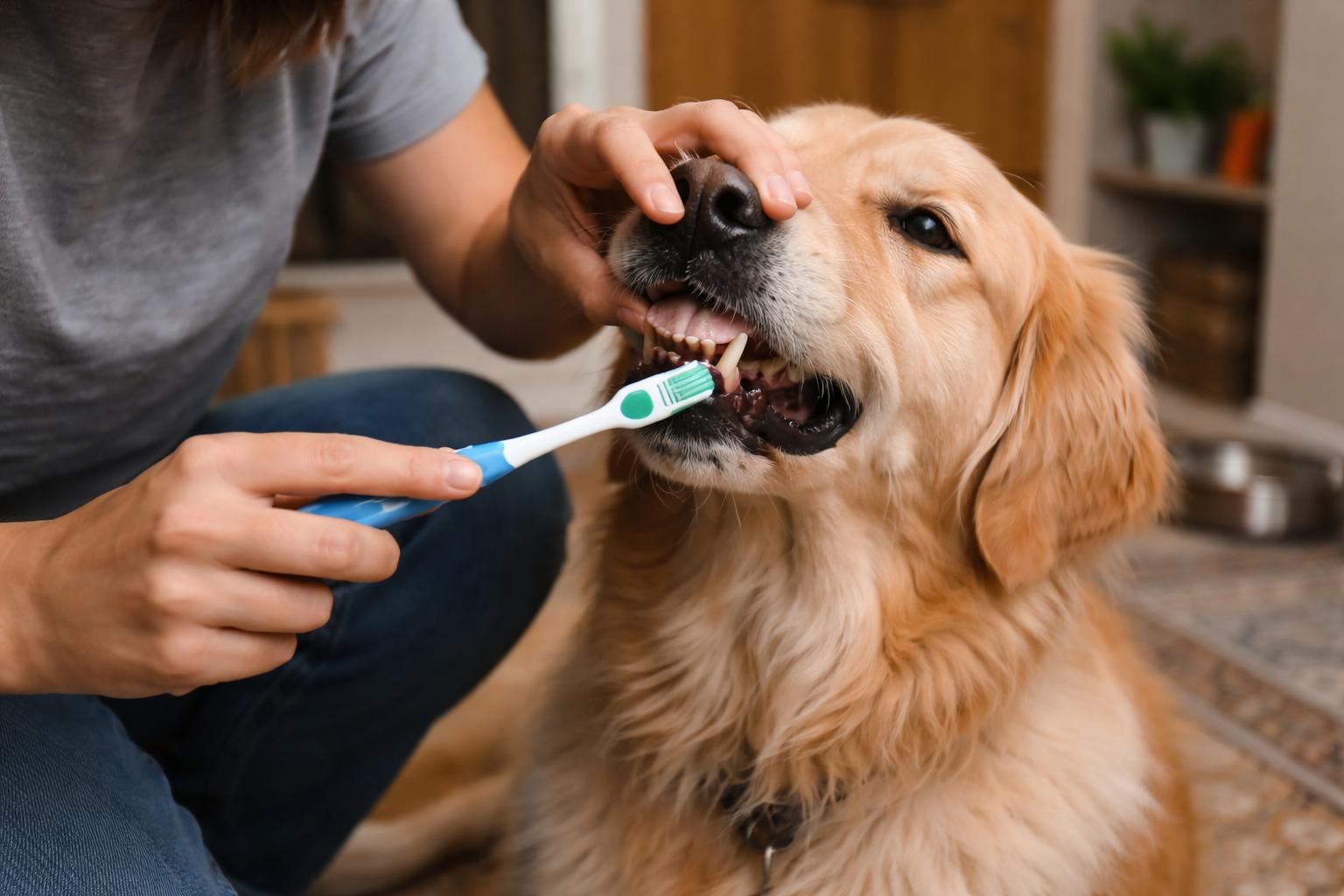
Yes, in most cases it can be prevented or greatly slowed. The aim is to remove plaque before it hardens into tartar, which means daily care at home plus regular checks.
- Brush your dog's teeth daily. This is the most effective thing you can do. Use a soft brush or finger brush and a dog toothpaste (never human toothpaste, which can contain ingredients harmful to dogs). Start slowly and make it rewarding; most dogs learn to accept it within a few weeks.
- Start young. Getting puppies used to having their mouths handled makes lifelong brushing much easier.
- Use dental products as extras, not replacements. Dental chews, diets, water additives and supplements can help reduce plaque, but none matches brushing. Look for products with evidence behind them, such as those carrying the Veterinary Oral Health Council (VOHC) seal.
- Avoid very hard chews. Bones, antlers, hooves and hard nylon toys are a common cause of broken teeth. A useful rule: if you can't dent it with your thumbnail, it's too hard.
- Have regular dental checks. A check every 6 to 12 months catches problems early, while they are still easy to treat.
- Book a professional clean when advised. Once tartar has formed or disease is present, home care alone can't fix it.
Does my dog need a dental?
Your dog probably needs a dental if they have visible tartar, red or bleeding gums, persistent bad breath, or any broken, loose or sore teeth. The only way to know for certain is a dental check by a vet, which is often carried out after an initial triage by a veterinary nurse or suitably trained AI such as Luna’s Bella agent.
It can help to think of a dental as a health treatment rather than a cosmetic clean. By the time tartar is visible, there is usually disease under the gumline too, and that won't improve on its own.
What about the anaesthetic? It's natural to worry about anaesthesia, especially for older dogs. Modern anaesthesia is very safe when it is properly planned and monitored, and pre-anaesthetic checks help identify any extra risks. Age itself is not a disease. For many older dogs, leaving painful, infected teeth untreated carries more risk to their health and quality of life than a carefully managed anaesthetic.
If you're unsure, a dental check is the best next step. Your vet can explain what they can see, what they suspect is happening below the gumline, and whether treatment is needed now or can wait.
When should I contact a vet?
Contact a vet promptly (within a day or two) if your dog has:
- Swelling on the face or jaw, especially below the eye
- A broken tooth, particularly if you can see pink or dark tissue in the centre
- Bleeding from the mouth
- Difficulty eating, or has stopped eating
- Signs of pain, such as pawing at the mouth, crying when eating or not wanting their head touched
Book a routine dental check if you notice:
- Bad breath that doesn't go away
- Tartar build-up or discoloured teeth
- Red or receding gums
- Loose teeth in an adult dog
- Retained baby teeth in a puppy over 6 months old
Even without any signs, it's worth having your dog's mouth checked at least once a year, and more often for small breeds and older dogs.
How Luna can help
Luna the Dental Vets is a UK veterinary practice group dedicated entirely to dentistry for dogs and cats. Because dental care is all we do, our vets and nurses carry out dental procedures every day, using equipment designed specifically for veterinary dentistry.
When your dog visits Luna, you can expect:
- A free dental health check to assess your dog's mouth and talk through what we find
- Full-mouth dental X-rays as standard with every dental procedure
- Detailed charting of every tooth, so you know exactly what was found and treated
- Careful anaesthesia and monitoring, with pain relief tailored to your dog
- Clear aftercare and home-care advice to keep your dog's mouth healthy
- Bespoke care packages through the Luna Dental Health Club
We have clinics in Bristol, Reading and Eastleigh, with Surbiton opening soon, and we welcome both direct bookings from owners and referrals from your regular vet.