Professional Dental Cleaning for Dogs and Cats
By Dr Joe Inglis BVSc MRCVS ·
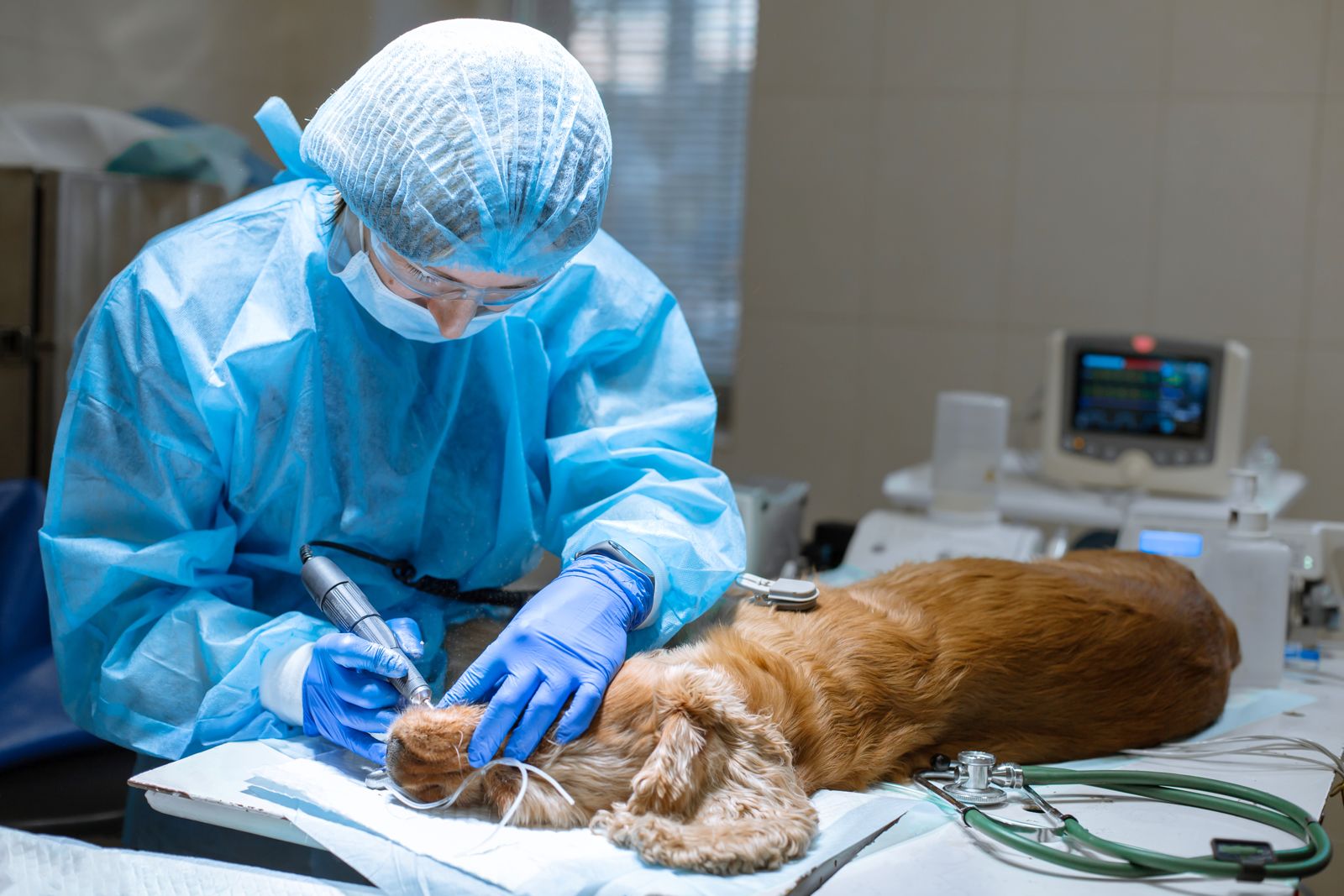
A professional dental cleaning is a procedure carried out by a vet under general anaesthetic to examine, clean and treat your pet's teeth, both above and below the gumline. It is the only way to remove tartar properly and to find and treat the disease hidden beneath the gums, which is where most dental problems in dogs and cats start. This guide explains exactly what happens during a professional cleaning, step by step, why each stage matters, and what to expect afterwards.
What is a professional dental cleaning?
A professional dental cleaning is often called a dental, a scale and polish, or by vets a COHAT (Comprehensive Oral Health Assessment and Treatment). The last name is the most accurate, because a proper cleaning is as much about assessment as it is about cleaning.
It combines three things:
- Assessment: examining, probing and X-raying every tooth to find disease
- Cleaning: removing plaque and tartar from above and, most importantly, below the gumline, then polishing
- Treatment: dealing with any problems found, such as extracting painful or infected teeth
A professional cleaning is a health treatment, not a cosmetic one. Its purpose is to stop and treat infection and pain, not just to make teeth look white.
At Luna we offer two dental packages, the Luna Protect & Shine and Luna Fix & Shine, both of which include a full professional dental cleaning.
Why can't brushing or chews do the same job?
Home care and professional cleaning do different jobs, and both matter.
Home care removes soft plaque. Daily brushing, dental diets, chews and supplements such as Luna Plaque Protect help stop plaque building up. They are excellent at prevention.
Home care can't remove tartar. Once plaque hardens into tartar, usually within a few days, it is stuck firmly to the tooth. No brush, chew, spray or supplement can remove it.
Home care can't reach below the gumline. The most damaging bacteria live in the narrow pocket between the tooth and gum. Cleaning there needs specialist instruments and an anaesthetised patient.
Home care can't diagnose disease. Problems such as bone loss, root abscesses and, in cats, tooth resorption are invisible without probing and dental X-rays.
The best approach is a professional cleaning to reset the mouth to a healthy state, followed by good daily home care to keep it that way.
Professional dental cleaning, step by step
A thorough professional cleaning follows a set sequence. Each step has a specific purpose.
1. Pre-anaesthetic assessment
Before the procedure, your pet has a health check, and blood tests where needed, particularly for older animals. This helps the vet plan the safest anaesthetic and spot any conditions that need managing first.
2. Anaesthesia and monitoring
Your pet is given a sedative and pain relief, then a general anaesthetic. A breathing tube with an inflatable cuff is placed in the windpipe. This protects the airway from the water and debris produced during cleaning. Heart rate, breathing, oxygen levels, blood pressure and temperature are monitored continuously, and your pet is kept warm throughout.
3. Initial oral examination
The vet examines the whole mouth, including the lips, tongue, palate, throat and gums, looking for swellings, ulcers, growths and signs of inflammation.
4. Probing and charting
A thin, blunt probe with millimetre markings is gently placed between each tooth and the gum to measure any pockets, check for gum recession and look for bleeding. The vet also checks each tooth for mobility, fractures and wear, and in cats for resorptive lesions. Every finding is recorded on a dental chart, tooth by tooth.
5. Dental X-rays
Dental X-rays show the roots and surrounding bone, which can't be seen any other way. They reveal bone loss, root infections, fractured roots, retained roots and, in cats, tooth resorption. Many treatment decisions depend on them.
6. Scaling above the gumline (supragingival scaling)
An ultrasonic scaler, which vibrates at high frequency and is cooled by a fine water spray, breaks tartar away from the visible tooth surfaces. Large deposits may first be gently removed with hand instruments.
7. Cleaning below the gumline (subgingival scaling)
This is the most important step. Using fine ultrasonic tips and hand instruments called curettes, the vet carefully cleans plaque, tartar and bacteria from the root surfaces inside the gum pocket. This is where periodontal disease does its damage, and it's the part that can never be done on an awake animal.
8. Root planing
Where pockets are present, the root surfaces are smoothed so that the gum has the best chance of healing and reattaching to the tooth. This is usually offered as an additional service in cases where the vet believes it will be beneficial to the pet.
9. Polishing
Scaling leaves microscopic scratches on the enamel, which plaque would stick to more easily. Polishing with a fine paste smooths the tooth surfaces, slowing future plaque build-up.
10. Rinsing and final check
The mouth is rinsed to remove debris and polishing paste, and the vet checks every tooth and gum pocket a final time.
11. Treatment of any problems
Any teeth that are diseased are treated, usually by extraction, with local anaesthetic nerve blocks for pain relief. Follow-up X-rays confirm that extractions are complete.
12. Recovery
Your pet wakes up in a warm, quiet area, monitored by the team until they are fully awake and ready to go home, usually the same day.
The equipment used
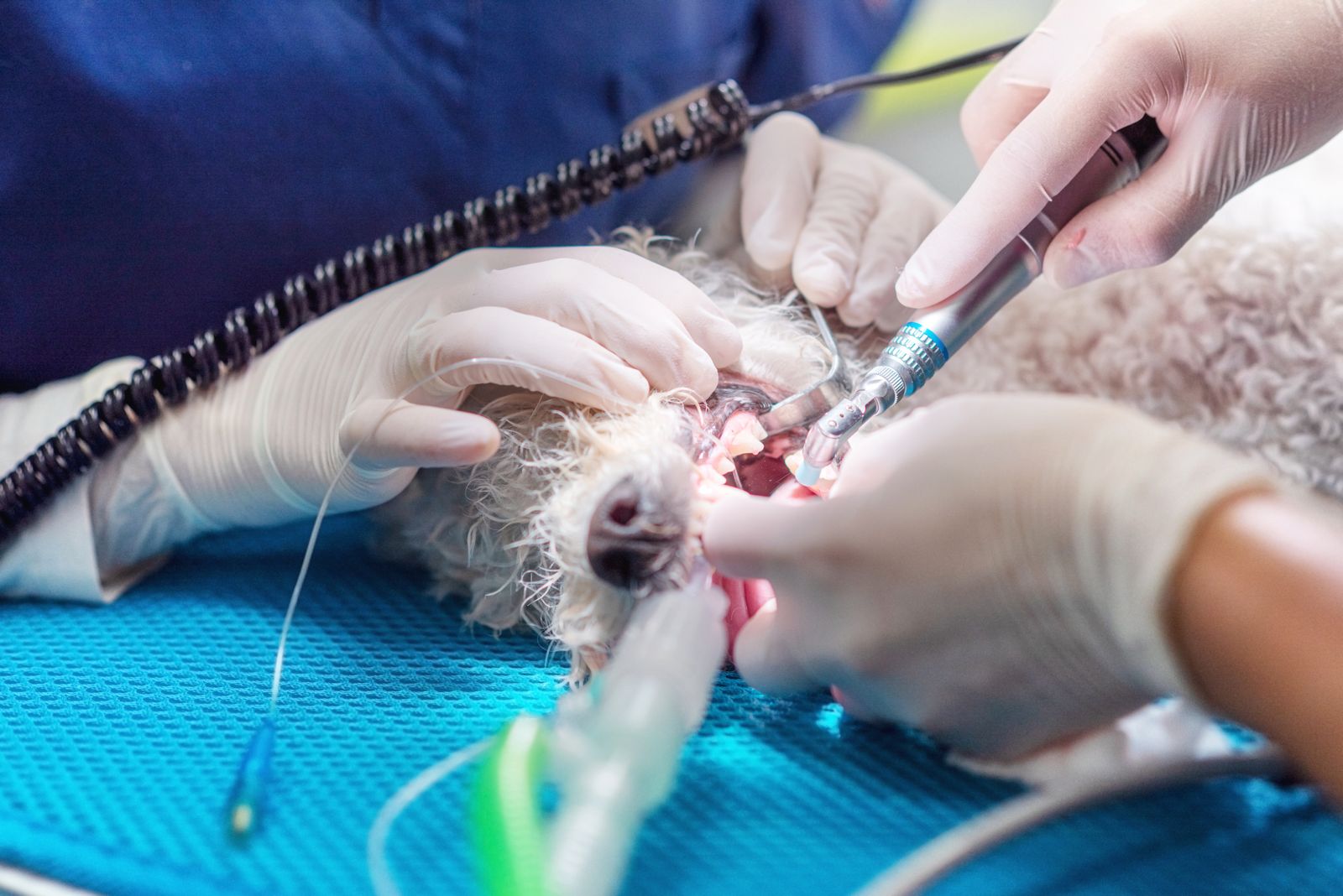
A professional cleaning uses specialist veterinary dental equipment, much like a human dental surgery:
- Dental X-ray unit and digital sensors, for clear images of every tooth root
- Ultrasonic scaler, which uses high-frequency vibration and water to remove tartar
- Hand scalers and curettes, for precise cleaning, especially below the gumline
- Periodontal probe, to measure gum pockets in millimetres
- Dental explorer, to check for fractures and, in cats, resorptive lesions
- Low-speed polisher, to smooth the tooth surfaces
- High-speed dental drill and elevators, used when teeth need to be extracted
- Anaesthetic monitoring equipment, tracking vital signs throughout
What if problems are found during the cleaning?
It's very common to find more under anaesthetic than could be seen at the conscious check, because so much dental disease is hidden below the gumline.
Common findings include:
- Teeth with advanced periodontal disease, where too much bone has been lost to save them
- Fractured teeth with exposed pulp
- Tooth root abscesses
- Tooth resorption in cats
- Retained roots from old broken teeth
These are usually treated during the same anaesthetic, most often by extracting the affected teeth. This avoids a second procedure and ends your pet's pain straight away. The Luna Fix & Shine dental package includes up to 90 minutes of surgical dental time for extractions, in addition to the full professional dental assessment, X-rays and cleaning.
Before the procedure, your vet will discuss how they'll handle unexpected findings. If what they find is very different from what was expected, they will usually phone you to talk it through before going ahead.
How does a dental cleaning differ for dogs and cats?
The process is the same, but each species brings its own priorities.
| Dogs | Cats | |
|---|---|---|
| Number of adult teeth | 42 | 30 |
| Most common problem | Periodontal disease | Periodontal disease and tooth resorption |
| Other key conditions | Fractured teeth, tooth root abscesses | Stomatitis, fractured canine teeth |
| Main focus of X-rays | Bone loss and root health | Finding hidden tooth resorption, plus bone loss |
| Most at risk | Small and toy breeds, older dogs | Older cats |
| Common reasons for extraction | Advanced periodontal disease, fractures | Tooth resorption, stomatitis, periodontal disease |
| Home care | Most dogs can learn to accept brushing | Many cats won't accept brushing, so dental diets and regular checks matter more |
Cats' teeth are smaller, with fine roots that break easily, so extractions need particular care and X-rays before and after are essential.
Why anaesthesia is essential, and how it is kept safe
A professional cleaning can only be done properly under general anaesthetic. It allows the vet to:
- Clean below the gumline, which would be painful and impossible on an awake animal
- Probe and X-ray every tooth, which requires your pet to be completely still
- Treat problems straight away, such as extracting painful teeth
- Protect the airway from water, bacteria and debris
- Avoid pain and stress for your pet
So-called "anaesthetic-free" cleaning only scrapes visible tartar from the crown. It can't clean below the gumline, can't diagnose or treat disease, and gives false reassurance. Veterinary dental specialists advise against it.
Keeping anaesthesia safe. Modern veterinary anaesthesia is very safe. Risk is kept as low as possible through pre-anaesthetic checks, a plan tailored to your pet's age and health, continuous monitoring, careful warming, fluids where needed, and close supervision during recovery.
Older pets. Age isn't a disease. With health problems identified and managed beforehand, many older dogs and cats have anaesthetics safely. For most, leaving painful, infected teeth untreated carries greater risk to their health and quality of life.
How often do pets need a professional cleaning?
There's no single answer. Some pets need a cleaning every year, while others with excellent home care may go several years between procedures. It depends on:
- Species and breed. Small and toy dog breeds tend to need cleanings more often. Cats prone to tooth resorption need regular monitoring.
- Age. Older pets usually need more frequent care.
- Home care. Pets whose teeth are brushed daily typically need professional cleaning far less often.
- History. Pets who have had periodontal disease need closer monitoring.
As a guide, every dog and cat should have a dental check at least once a year, and many benefit from a check every 6 months. Your vet will recommend a professional cleaning when it's needed, based on what they see.
Recovery and aftercare
Most pets go home the same day and are back to normal within a day or two. On the first evening your pet may be sleepy, and a small, soft meal is usually recommended. Keep cats indoors overnight.
If your pet has had extractions, you'll usually be advised to:
- Feed soft food for a short period while the gums heal
- Avoid chews and hard toys until your vet says it's OK
- Give pain relief exactly as prescribed
- Attend a post-operative check so healing can be assessed
A clean mouth is the perfect starting point for good home care:
- Brush daily, once the gums have healed, using a soft brush and pet toothpaste
- Use evidence-based dental products, such as Luna Plaque Protect dental supplement
- Book regular dental checks, every 6 to 12 months
Plaque starts to return within hours of a cleaning, so daily home care is what keeps the benefits going.
Frequently asked questions
How long does a professional dental cleaning take?
The procedure itself usually takes approximately 45-60 minutes, depending on how much disease is present and whether extractions are needed. However, pets are usually kept in the clinic for most of the day for the whole process including admission, preparation, and recovery.
Will my pet be in pain afterwards?
Your pet is given pain relief before, during and after the procedure, including local anaesthetic nerve blocks if teeth are extracted. Most pets are comfortable and eating the same evening or the next day.
Can my pet eat normally with missing teeth?
Yes. Dogs and cats adapt remarkably well, and most eat normally, including dry food, even after several extractions. Many eat better than before, because their mouth is no longer painful.
Is a scale and polish the same as a professional dental cleaning?
The terms are often used interchangeably. A thorough professional cleaning includes much more than scaling and polishing visible surfaces: it should also include probing, full-mouth X-rays, cleaning below the gumline and treatment of any problems found.
Do I need a referral from my vet?
No. You can book directly with Luna, and we also welcome referrals from your regular vet.
How do I know if my pet needs a cleaning?
Signs include bad breath, visible tartar, red or bleeding gums, and changes in eating. Many pets need one without obvious signs. A dental health assessment is the best way to find out.
How Luna can help
Luna the Dental Vets is a UK veterinary practice group dedicated entirely to dentistry for dogs and cats. Professional dental cleaning is at the heart of what we do. If you're not sure whether your pet needs one, an online dental health check with Bella followed by a free in-person dental health assessment appointment is the best place to start.
When your pet visits Luna, you can expect:
- A dental health assessment to assess your pet's mouth and give you a clear recommendation
- A choice of dental packages, the Luna Protect & Shine and Luna Fix & Shine
- Full-mouth dental X-rays as standard with every dental procedure
- Thorough cleaning above and below the gumline, followed by polishing
- Detailed charting of every tooth, so you know exactly what was found and treated
- Careful anaesthesia and monitoring, with pain relief tailored to your pet
- Clear communication, before, during and after the procedure
- Practical aftercare and home-care advice
- Bespoke care packages through the Luna Dental Health Club
We have clinics in Bristol, Reading and Eastleigh, with Surbiton opening soon, and we welcome both direct bookings from owners and referrals from your regular vet.