Tartar in Dogs: Causes, Treatment and Prevention
By Dr Joe Inglis BVSc MRCVS ·
Tartar is the hard, yellow-brown deposit that builds up on dogs' teeth, especially the back teeth. It forms when plaque, a soft film of bacteria, is left on the teeth and hardens. Tartar isn't just a cosmetic problem: it is a sign that bacteria are attacking the gums, and it usually means some degree of gum disease is already present. Once formed, tartar can't be brushed off and needs to be removed by a vet. This guide explains what causes tartar, why it matters, and how to prevent it coming back.
What is tartar?
Tartar, also known as dental calculus, is plaque that has hardened on the surface of the teeth. It forms when minerals in saliva, mainly calcium salts, are deposited into plaque, turning a soft bacterial film into a hard, crusty layer firmly stuck to the tooth.
Tartar usually builds up first along the gumline and on the outer surfaces of the upper back teeth (the premolars and molars), close to where the salivary glands release saliva. Over time, it can spread to cover much of the tooth and extend below the gumline.
Tartar itself is mostly mineral, but its rough, porous surface is an ideal place for new plaque bacteria to grow. This means tartar build-up tends to speed up once it starts.
Plaque vs tartar: what's the difference?
Plaque and tartar are often confused, but they are different stages of the same process.
| Plaque | Tartar | |
|---|---|---|
| What it is | A soft, sticky film of bacteria | Plaque that has hardened with minerals |
| Appearance | Hard to see; pale or creamy | Yellow, brown or grey crust |
| How quickly it forms | Within hours of eating | Within a few days, if plaque isn't removed |
| Can brushing remove it? | Yes | No |
| How it's removed | Daily brushing | Professional scaling by a vet |
| Main risk | Causes gingivitis and gum disease | Traps more plaque and bacteria against the gums |
The key point: plaque is what causes disease, and it can be removed at home. Tartar is what plaque becomes when it's left too long, and it needs professional treatment.
What causes tartar build-up?
Tartar forms whenever plaque is left on the teeth long enough to harden. Every dog produces plaque, so every dog is at risk of tartar. Factors that make it more likely include:
- No regular tooth brushing. This is the biggest factor. Plaque that isn't removed every day or two starts to harden.
- Small and toy breeds. Crowded teeth in small jaws create more places for plaque to collect. Dogs under 15 kg are 2.5 times more likely to develop periodontal disease than dogs weighing 30 to 40 kg (RVC VetCompass).
- Certain breeds. Greyhounds, King Charles Spaniels, Toy Poodles, Cavalier King Charles Spaniels, Yorkshire Terriers and Border Terriers are among the most commonly affected by gum disease.
- Age. Tartar builds up over time, so older dogs usually have more.
- Misaligned or retained baby teeth, which trap plaque in hard-to-clean spots.
- Saliva and individual variation. Some dogs simply form tartar faster than others, even with similar diets and care.
Diet can play a part, but no diet alone prevents tartar. Dry food is sometimes said to keep teeth clean, but ordinary kibble has little effect; specially designed dental diets work better.
Is tartar harmful to dogs?
Yes, mainly because of what comes with it. Tartar is a visible sign that plaque bacteria have been sitting on the teeth for some time, and those bacteria are what cause disease.
Tartar contributes to dental problems in several ways:
- It holds bacteria against the gums, causing gingivitis: red, swollen, bleeding gums.
- It spreads below the gumline, where bacteria destroy the ligament and bone holding the teeth in place. This is periodontal disease, the most commonly diagnosed health problem in UK dogs. Read more about periodontal disease
- It causes bad breath, as the bacteria release smelly sulphur compounds.
- It can lead to pain, infection and tooth loss if left untreated.
The amount of tartar you can see doesn't always match the amount of disease. A dog with only a little visible tartar can have significant disease below the gumline, while heavy tartar sometimes hides teeth that are already loose.
What does tartar look like?
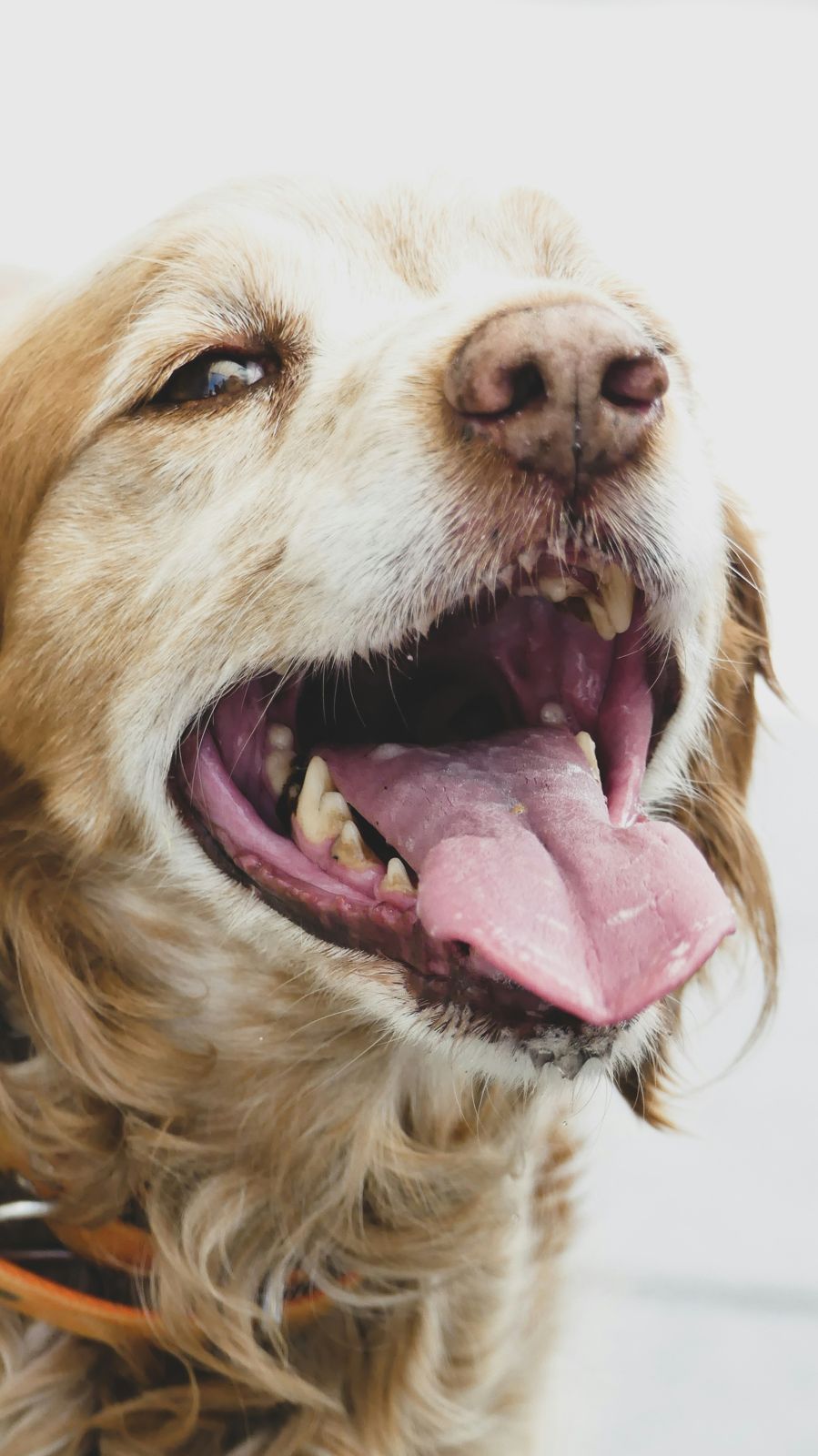
To check your dog's teeth, gently lift their upper lip at the side of the mouth and look at the back teeth, which are usually affected first. Tartar typically appears as:
- A yellow, brown or grey crust, often starting as a thin line along the gumline
- A rough, hard build-up that doesn't come off when rubbed
- Thick deposits on the large upper back teeth (the carnassial teeth) in more advanced cases
Signs that tartar is causing problems include:
- A red line along the gums, a sign of gingivitis
- Bleeding gums, or blood on toys
- Bad breath
- Receding gums or exposed roots
- Loose teeth
- Reluctance to chew, chewing on one side, or pawing at the mouth
Staining is different from tartar. Stains are flat discolouration on the tooth surface, while tartar is a raised deposit. If you're unsure which you're seeing, your vet can tell you.
Can I remove tartar from my dog's teeth at home?
No. Once plaque has hardened into tartar, it can't be removed by brushing, chews, sprays, water additives or supplements. These products can help slow new tartar forming, but they won't dissolve tartar that's already there.
Some owners try scraping tartar off with dental tools or their fingernails. This isn't recommended, because:
- It doesn't treat the real problem. The most harmful tartar and bacteria are below the gumline, which scraping can't reach.
- It can damage the teeth and gums. Sharp instruments can scratch the enamel and injure the gums, and scratched teeth attract plaque even faster.
- It can hide disease. Teeth may look cleaner while infection continues underneath.
- It can be painful and stressful, and may cause your dog to become wary of having their mouth handled.
The right approach is professional removal by a vet, followed by daily brushing to stop plaque building up again.
How do vets remove tartar?
Tartar is removed during a dental procedure, often called a scale and polish, carried out under general anaesthetic. A thorough procedure includes:
- Examination and charting of every tooth, including probing around each one to check for pockets below the gumline
- Full-mouth dental X-rays to check the roots and bone, which can't be seen otherwise
- Scaling above the gumline, using an ultrasonic scaler that breaks tartar off with high-frequency vibration and water
- Scaling below the gumline (subgingival scaling), the most important step, using fine instruments to clean the root surface inside the gum pocket
- Polishing to smooth the tooth surface, removing tiny scratches from scaling so plaque is slower to stick
- Treatment of any diseased teeth, such as extracting teeth that are loose, broken or badly infected
- Aftercare advice, including how to start brushing to keep tartar from returning
Removing tartar from the visible crown is only part of the job. A proper dental focuses on cleaning below the gumline and finding any disease hidden there.
Why does tartar removal need an anaesthetic?
Some services offer "anaesthetic-free" or "cosmetic" tartar removal on awake dogs. Veterinary dental specialists advise against this, for several reasons:
- It can't clean below the gumline, where tartar and bacteria cause the most damage. An awake dog won't keep still for this, and it would be painful.
- It doesn't allow X-rays or probing, so disease below the gumline goes undiagnosed.
- It can't treat problems it finds, such as infected or loose teeth.
- It risks injury. Sharp instruments near the gums of a moving dog can cause cuts and pain.
- It can be stressful, making future handling and brushing harder.
- It gives false reassurance. Teeth may look clean while serious disease continues underneath.
A general anaesthetic allows every tooth to be examined, cleaned and treated thoroughly and painlessly, with the airway protected from water and debris. Modern anaesthesia is very safe when properly planned and monitored, and pre-anaesthetic checks help manage any extra risks, including in older dogs.
How can I prevent tartar on my dog's teeth?
Preventing tartar means removing plaque before it has time to harden. The best time to start is with a clean mouth, either as a puppy or straight after a professional dental.
- Brush daily. Daily brushing is the most effective way to prevent tartar. As plaque starts hardening within days, brushing once or twice a week is far less effective. Use a soft brush and dog toothpaste (never human toothpaste), and focus on the outer surfaces of the back teeth and along the gumline.
- Use anti-tartar products alongside brushing. Some dental chews, diets and water additives contain ingredients that bind the minerals in saliva, slowing tartar formation. Luna Plaque Protect works to reduce the build-up of dental plaque which is the precursor of dental tartar.
- Choose chews carefully. Avoid bones, antlers and other very hard chews, which can break teeth. If you can't dent it with your thumbnail, it's too hard.
- Have regular dental checks every 6 months, so tartar and gum disease are caught early.
- Book a professional clean when advised. Treating tartar early is simpler, and reduces the chance of extractions later.
Even with excellent home care, some dogs will still need professional dental treatment from time to time, particularly small breeds and dogs prone to tartar.
Does my dog need a dental?
If you can see tartar on your dog's teeth, it's a good idea to book a dental check. Visible tartar usually means plaque has been building up for a while, and there may already be gum disease below the gumline.
Book a dental check if your dog has:
- Visible tartar, especially along the gumline
- Red, swollen or bleeding gums
- Persistent bad breath
- Loose, broken or discoloured teeth
- Difficulty or reluctance to chew
At Luna, we offer free in-person dental health assessments in our clinics, as well as our AI dental triage service online where our expert dental AI agent Bella can review photos of your dog’s teeth and make recommendations for dental bookings.
Contact a vet promptly if your dog has facial swelling, bleeding from the mouth, has stopped eating, or seems to be in pain.
At the check, your vet can explain how much tartar and gum disease they can see, what might be happening below the gumline, and whether a dental procedure is needed now.
How Luna can help
Luna the Dental Vets is a UK veterinary practice group dedicated entirely to dentistry for dogs and cats. Because dental care is all we do, every procedure we carry out focuses on what matters most: cleaning and assessing below the gumline, not just removing visible tartar.
When your dog visits Luna, you can expect:
- A dental health check to assess your dog's tartar and gums and explain what we find
- Full-mouth dental X-rays as standard with every dental procedure
- Thorough scaling above and below the gumline, followed by polishing
- Detailed charting of every tooth, so you know exactly what was found and treated
- Careful anaesthesia and monitoring, with pain relief tailored to your dog
- Practical home-care advice, including help getting started with brushing
- Bespoke care packages through the Luna Dental Health Club
We have clinics in Bristol, Reading and Eastleigh, with Surbiton opening soon, and we welcome both direct bookings from owners and referrals from your regular vet.